Viking Journal

  • Cutting Plywood Off Grid: Why I Carry a Cordless Track Saw

    Cutting Plywood Off Grid: Why I Carry a Cordless Track Saw

    Working on remote properties in Southeast Alaska means thinking about more than how a tool performs once it’s plugged in. First, you have to get it to the job site. Then you need a way to power it.

    For the off-grid cabin repairs and building projects we tackle through Alaskan Viking, a cordless track saw is one tool that earns its place. It gives us a portable way to make accurate cuts in plywood, flooring, and trim without hauling a table saw and generator ashore.

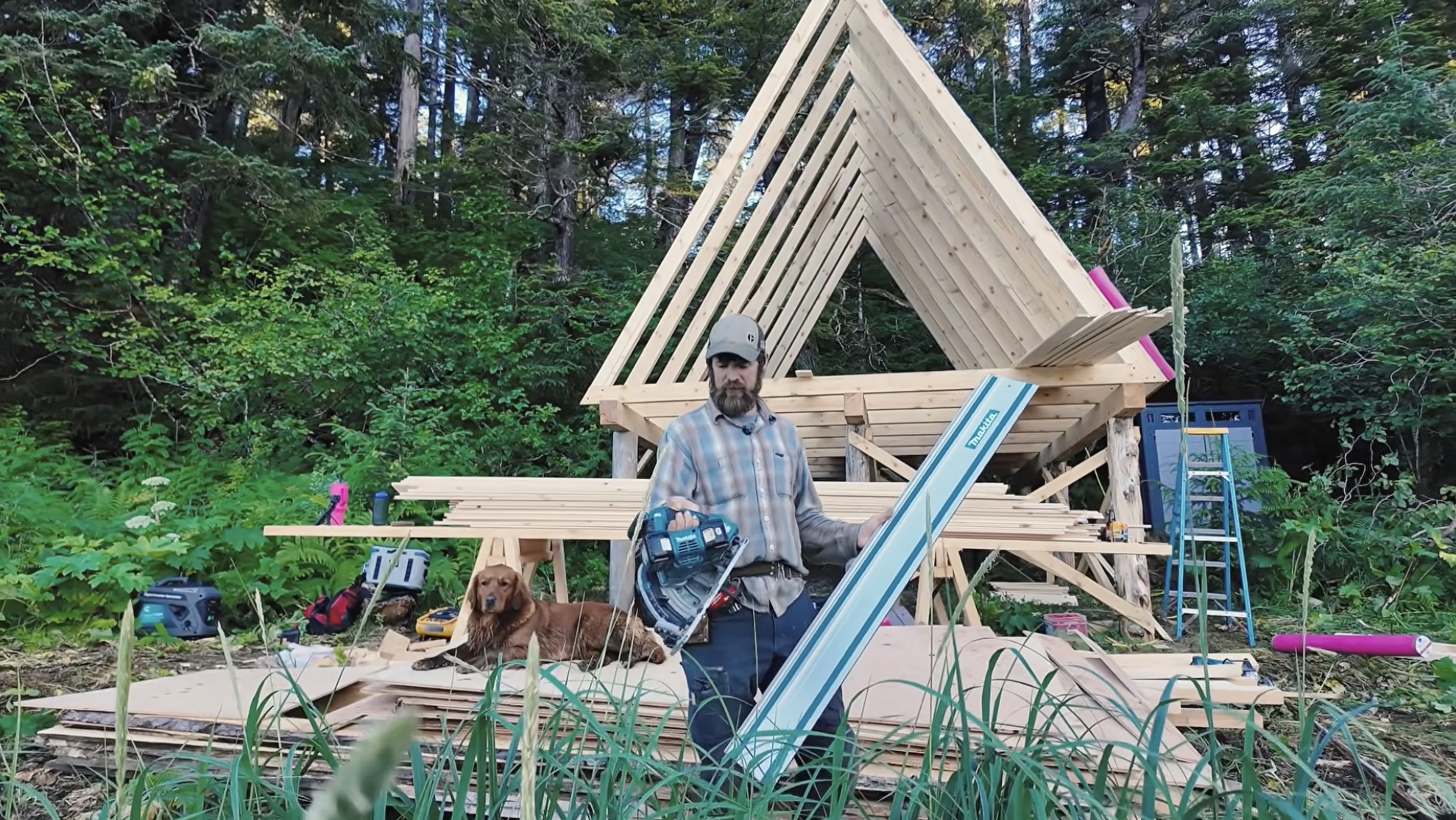
    In this short video, I’m using a Makita cordless track saw to cut plywood on a remote building project.

    Choosing tools for a remote job site

    A tool that’s convenient in a driveway can be a different proposition when it needs to travel by skiff, ride ashore on a paddleboard, and get carried up a beach.

    A job site table saw is wonderful to have on a framing project, especially when you’re cutting plywood sheathing. But its weight and bulk can make it difficult to justify on a remote build. Power is another consideration. Even with modern lightweight generators, having 110-volt power where you need it can be an unrealistic luxury.

    Those logistics shape the tools we carry. How much can one tool accomplish? How awkward is it to load and unload? Can it run on batteries we’re already bringing?

    Track saws have been around for a long time, but the cordless versions are what really caught my attention. A compact saw and a lightweight aluminum guide rail are a manageable load, and charged batteries let us work without setting up a generator for the saw.

    Cutting plywood without a table saw

    A track saw runs along a guide rail positioned on your material. Align the rail with your marks, and it guides the saw through a straight cut.

    That’s especially useful when you’re handling full sheets of plywood alone. Feeding a large sheet through a table saw takes space and support on both sides. Without roller stands or a large worktable, keeping everything supported and aligned can be a challenge.

    With a track saw, the plywood stays supported while the saw moves across it. On a remote cabin project, being able to cut sheet goods on a simple setup can save a lot of handling and effort.

    Long tapers, flooring, and trim

    Plywood is only part of the story. I also appreciate the track saw for ripping flooring and trim, particularly when a piece needs a long, gentle taper to fit.

    Following that line smoothly with a handheld circular saw takes care. Setting up the same cut on a table saw can be awkward. With the track, I can align the guide with the cut I need and make a straight taper without building a separate jig.

    Angled cuts across panels are similarly straightforward. That flexibility is useful in repair work, where the piece you need doesn’t always have parallel sides or square corners.

    A simple support option for sheet goods

    One setup I wasn’t using in this video is a flat panel of rigid foam insulation beneath the plywood. With the blade depth set just beyond the plywood’s thickness, the saw cuts slightly into the foam while it supports the material on both sides of the cut.

    It’s a useful option when you don’t have a large cutting table, provided the panel sits on a stable surface and the cutting path is clear underneath.

    A tool that earns the trip ashore

    I don’t use my track saw daily. But when I do, I’m almost always impressed by how quickly it produces a clean, straight cut with relatively little setup.

    It doesn’t replace every reason to own a table saw. For breaking down plywood and making long straight or tapered cuts at an off-grid job site, though, it offers a lot of capability in a portable package.

    That’s part of remote property work: matching the tools and approach to the access, available power, and actual problem. At Alaskan Viking, those decisions are part of the job before the first load leaves the Alaskan Gypsy.

    If you have a remote cabin repair or property project in Southeast Alaska, get in touch. Tell us where it is, what needs attention, and what access is available. Those details help us work out a practical approach.

    – Scott
  • Sawmilling Alaska Yellow Cedar: From Local Forest to Juneau

    Sawmilling Alaska Yellow Cedar: From Local Forest to Juneau

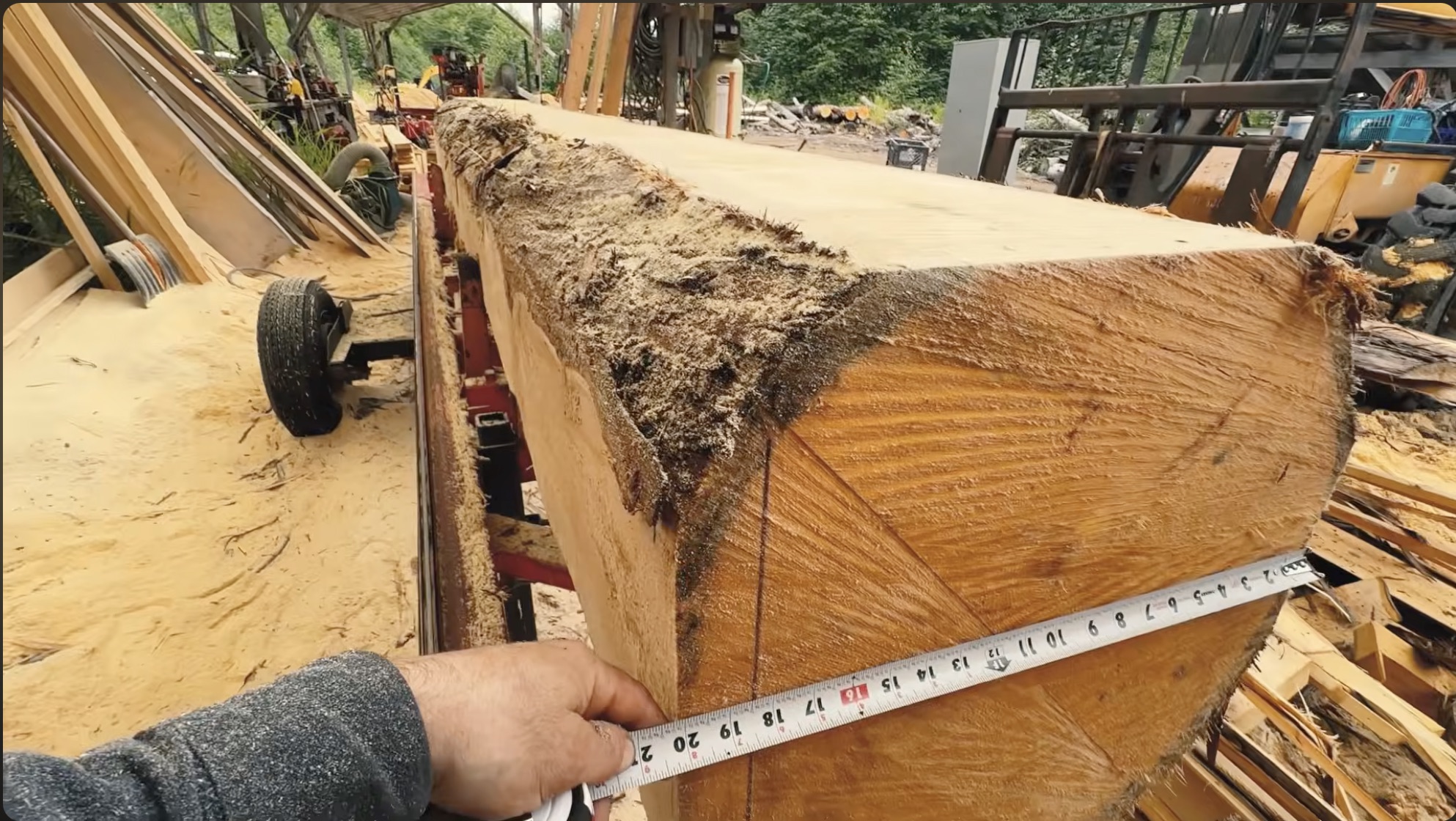
    It’s quite an honor to put a log like this on the sawmill. Alaska yellow cedar is a legendary wood in this part of the world, valued for its beauty, its usefulness, and its remarkable resistance to rot. In this video, we’re at the Tenakee Logging Company sawmill, turning an old growth yellow cedar log into full 2×6 lumber.

    Yellow cedar grows here in the rainforests of the Tongass, where moisture is a constant companion and most things return to the forest floor fairly quickly. Yellow cedar takes its time. Its heartwood is so resistant to decay that dead trees can remain standing for decades, sometimes approaching a century. Forest Service research backs up what people working in these woods have long observed.

    Early in my time in Southeast Alaska, I remember hearing a story about a newcomer asking an old timer how long yellow cedar foundation posts last.

    “I have no idea,” came the reply. “I’ve never seen one rot away.”

    A joke, perhaps, but one that says something about the wood’s reputation.

    For generations, people here have used yellow cedar beneath their cabins. It’s also prized for wooden boat planking, interior paneling, finish trim, and cabinetry—a beautiful material with practical qualities that make it especially valuable where moisture is part of everyday life.

    Working with it feels like a responsibility to make good use of what’s on the mill. This particular log was almost too large to fit, so there was some trimming, squaring, and planning involved before we could start producing the lumber we wanted. Every cut changes what’s possible with the next one, and the goal is to recover as much useful wood as we can.

    This lumber had a particularly satisfying destination: weaving looms made by Fairweather Woodworks in Juneau. Their handcrafted yellow cedar tabletop looms use a design shared by local weavers for Ravenstail and Chilkat weaving. The maker takes pride in the local material, describing its journey from Corner Bay’s forest through a small Tenakee sawmill to Juneau.

    That connection means a lot to me. Clear yellow cedar, carefully selected and worked, becomes a loom that someone else will use to create something of their own. Our part is one step in a much longer story of material, craftsmanship, and creativity here in Southeast Alaska.

    And the whole journey was close to home. The log came from the forest just up the road from the mill yard. We milled it right there, then carried the finished lumber aboard the Alaskan Gypsy to Juneau on our trip shortly afterward.

    There’s a good feeling in that: local wood, local work, and transportation aboard a boat already headed that way. Getting to help this extraordinary material travel from a nearby forest into the hands of another craftsperson is a privilege.

    – Scott

  • Introducing Alaskan Viking: A New Chapter in Southeast Alaska

    Introducing Alaskan Viking: A New Chapter in Southeast Alaska

    A winter storm, two trees across a cabin roof, and a grateful homeowner helped us see a new direction for Alaskan Viking. In this video, we introduce ourselves and share how life aboard the schooner Alaskan Gypsy grew into an opportunity to help remote property owners throughout Southeast Alaska.

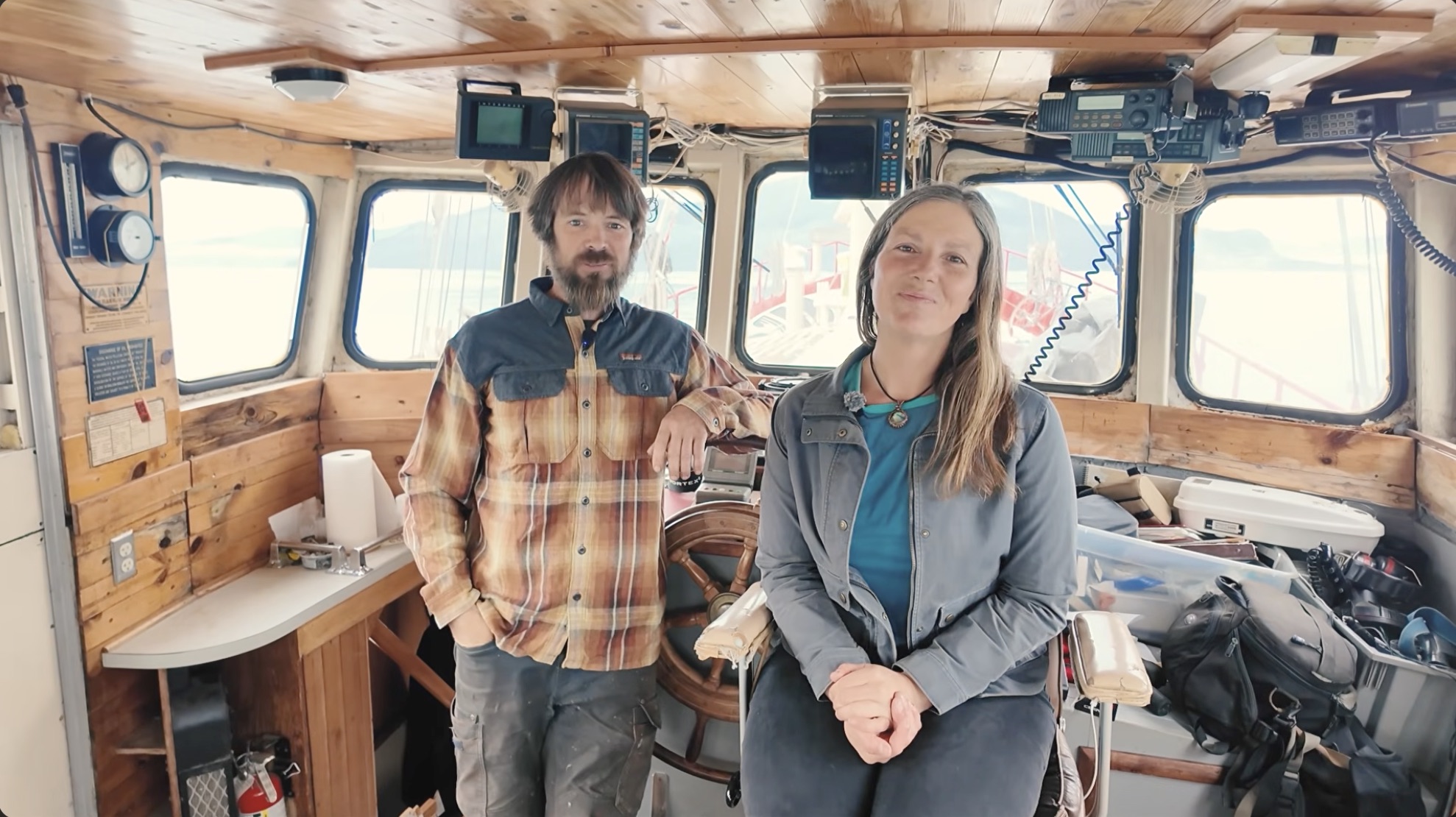
    We’re Scott and Audrey. Our home is the Alaskan Gypsy, an 80-foot steel schooner that we live aboard year-round. As we travel Southeast Alaska and beyond, we’re discovering how much this boat can offer as a floating workshop, carrying us and our tools to places where getting help can be half the challenge.

    One of the jobs that brought that idea into focus was in Port Protection. A winter storm had left two trees resting on a remote cabin, with branches puncturing the metal roof. With help from a neighbor and tools gathered locally and aboard the boat, we were able to remove the trees.

    The homeowner’s appreciation stayed with us. This was a family cabin that meant a great deal to her, and helping her care for it gave the work a purpose beyond simply getting a job done.

    That experience helped shape what Alaskan Viking is becoming: practical help for the projects and problems that come with owning property off the road system. From hazard trees and storm damage to carpentry, welding, repairs, troubleshooting, and property checks, we’re putting our skills and our floating home to work.

    The Viking Journal will be a place to share those projects, the people we meet, and what we learn along the way.

    Have a remote property in Southeast Alaska that needs attention—or know someone who does? Get in touch and tell us what’s going on.

    — Scott & Audrey