
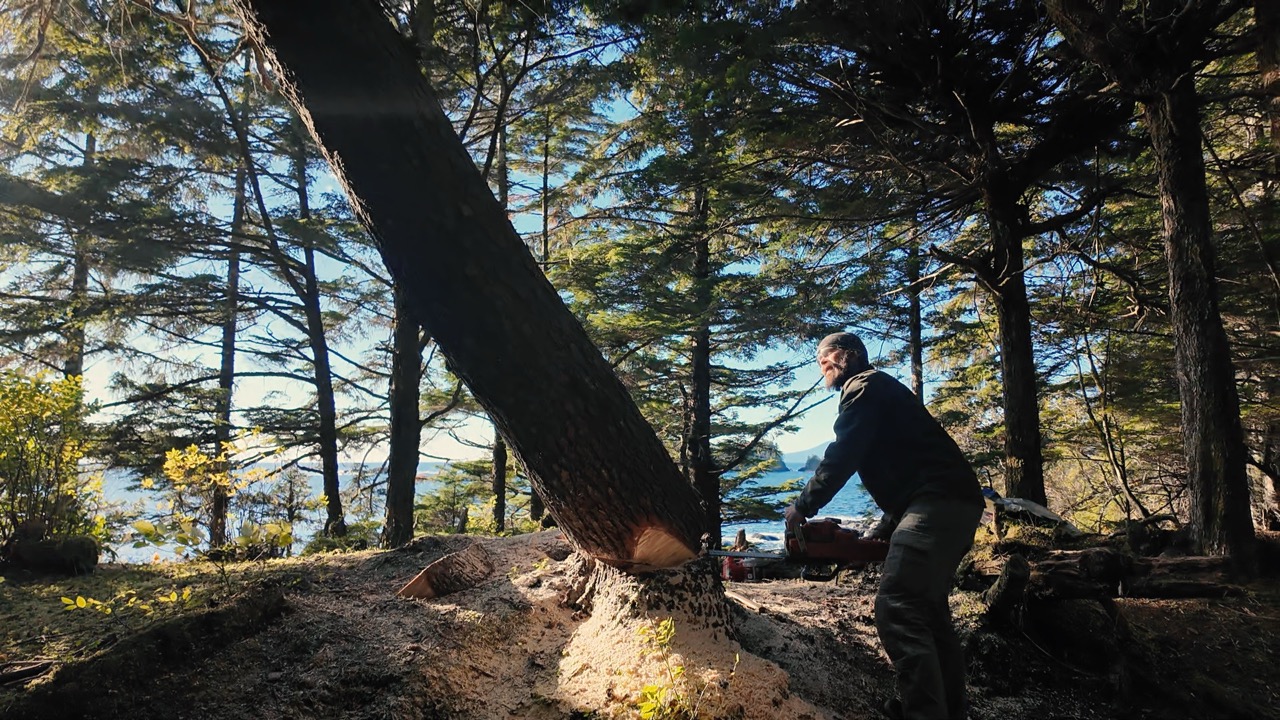
She’d owned five acres on an island near Sitka for 15 years. She’d camped there, explored the property, and spent plenty of time imagining a cabin. The trouble was that she could picture it in half a dozen places. We went out to walk the land, talk through her options, and see what we could get started that day. I brought a chainsaw just in case.
Where do you build an off-grid cabin?
We walked past her tent platform, her favorite beach, and the spots with views of the volcano. Each had a tradeoff. Did she want the open view and more exposure to weather, or the shelter of the woods? How would she get building materials from the landing to the cabin? Which sites drained well? Which would still be easy to reach as she got older?
We talked through cabin designs and building methods, too. A simple place to get out of the rain has different requirements from a cabin you might live in year-round. Thinking through insulation, wiring, and plumbing early helped frame what she could build now and what she might want to leave room for later.
By the time we’d walked the property together, it seemed pretty clear which spot she kept coming back to. There was one tree right in the middle of it.
A little tree clearing got the project moving
I’d guessed the tree would take about 20 minutes. It got hung up on the way down, so my estimate went out the window. We had a beautiful day for it, and after 15 years of thinking about where to build, giving that one tree a little extra time seemed fair enough.
That evening she wrote, “I know it was just a single tree, but it’s going to start a domino chain of movement now after so many years.”
My grandma used to say, “Once begun, halfway done.” As a kid I thought that was a pretty generous way of counting. I get it a little better now. Sometimes the first useful step on a remote property is a trail, a better landing, or one tree cleared from a cabin site. Once you can stand in that spot and see what changed, the next decision gets easier.
How boat access affects the cost of remote property work
We were already headed to Sitka aboard the Alaskan Gypsy, so there was no travel charge on this job. That made it affordable for the owner to have us walk the property with her, talk through a plan, and get some work done on the same visit.
Right after this job, we headed six hours north along the Gulf coast of Chichagof Island to help get another cabin dried in before winter. Two different projects, one trip. When the route and timing line up, we can sometimes combine jobs and make the travel work better for everyone. That’s the Alaskan Gypsy way.
If you’re planning an off-grid cabin or developing a remote property anywhere in Southeast Alaska, tell us where it is, how you get ashore, and what you’d like to get done. A map pin and a little information about the landing are a good start. Whether you need help choosing a cabin site, clearing a few trees, or getting a building ready for winter, we may already be headed your way.
— Scott Dickerson, Alaskan Viking
Leave a Reply